AI Moderation in Qual: Your 2026 Guide to Scaling Insights Without Sacrificing Depth
In 2026, the question isn't if AI belongs to qualitative research, but how. In the high-pressure world of 2026 research, we’ve all been there: a client needs 100 deep-dive interviews across three time zones, and they need the synthesis by Monday.
Traditionally, this meant "Qualitative Lite", shorter sessions, smaller samples, or exhausted moderators. But the momentum behind AI moderation isn't about cutting humans out of the loop; it’s about giving researchers their weekends back while delivering the depth clients crave.
Why AI Moderation is Gaining Momentum in 2026
The shift towards AI in qualitative research is driven by a critical need to overcome traditional limitations:
• Scalability: AI enables hundreds of participants to engage simultaneously, solving the "depth vs. scale" dilemma.
• Asynchronous Advantage: Participants engage on their own schedules, leading to more thoughtful responses and eliminating complex global scheduling.
• Reduced Bias & Enhanced Honesty: Research in 2026 suggests participants often share more sensitive or candid feedback with an AI, free from perceived human judgment or social desirability bias.
• Instant Multi-Lingual Capability: AI moderators can seamlessly probe in numerous native languages, aggregating diverse global insights into a single, cohesive analysis stream almost immediately.
How to Integrate AI Moderation Across the Research Lifecycle
The power of AI moderation truly shines when strategically integrated into every phase of your qualitative project. It acts as an intelligent junior moderator, handling the heavy lifting while human researchers elevate to a senior, strategic role.
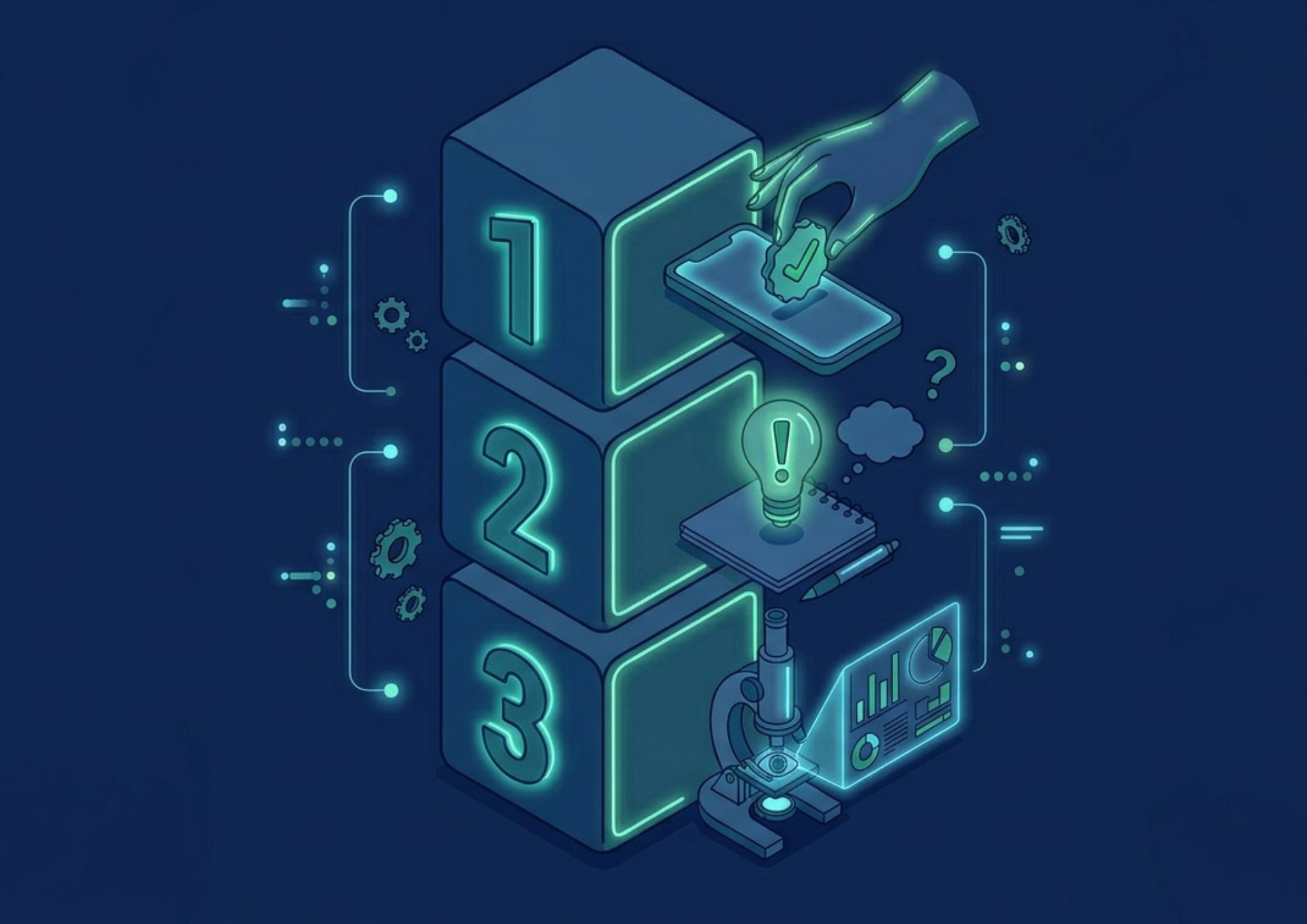
1. The Design Phase: Precision & Pre-Validation
Before fieldwork even begins, AI refines your approach.
• Discussion Guide Optimization: Utilize AI to simulate "synthetic personas" that pressure-test your discussion guides. If the AI "respondent" flags ambiguity or confusion in a question, you can refine it before engaging a single real participant, saving time and resources.
• Hypothesis Generation: AI can rapidly analyze existing data (e.g., past survey open-ends, social media conversations) to generate new hypotheses, informing your qualitative objectives.
2. The Fieldwork Phase: Scaled Engagement & Deeper Probing
This is where AI takes on the bulk of the moderation, allowing for unprecedented scale.
• Asynchronous Engagement: Deploy AI moderators for large-scale qualitative "pulse checks" or exploratory studies where you need insights from hundreds, not just dozens, of participants. AI ensures all topics are covered and probes for clarity based on pre-programmed logic.
• Consistent Probing: AI ensures every participant receives the same core probing, reducing moderator bias and ensuring comparability across diverse samples.
• Early Red Flag Identification: AI can be programmed to flag specific keywords, sentiments, or inconsistencies in real-time, alerting human researchers to areas needing immediate attention or deeper human follow-up.
3. The Analysis Phase: Accelerated Synthesis & Strategic Focus
Post-fieldwork, AI transforms raw data into actionable insights at speed.
• Rapid Thematic Analysis: AI can cluster hundreds of transcripts and responses into key themes and sentiment patterns in minutes, drastically reducing manual coding time.
• Highlight Reel Generation: AI tools can identify "emotion spikes" or "key moments" in video or audio responses, automatically generating highlight reels for stakeholders, allowing researchers to skip hours of review and go straight to impactful segments。
• Quantitative Augmentation: AI can quantify qualitative themes, bridging the gap between qual and quant by showing the prevalence of specific sentiments or ideas across a large qualitative dataset.
The Reality: Human Touch for Human Problems
At the end of the day, AI can moderate, but it cannot advise. It can find a pattern, but it cannot explain the "soul" of a brand. In 2026, the best researchers are using AI to handle the "labor" of qualitative research so they can focus on the "craft."
The Youli Perspective: We don't just provide the tool; we provide the guardrails. We ensure your AI-led studies are grounded in real-world logic and verified human data. Get in touch today